












Adaptive Cruise Control
What Is Adaptive Cruise Control and How Does It Work?
Adaptive cruise control is a driver-assistance feature that automatically adjusts a vehicle's speed to help maintain a selected following distance from traffic ahead.
Instead of simply holding one speed like traditional cruise control, adaptive cruise control can slow the vehicle when traffic ahead slows and then accelerate again when the road clears.
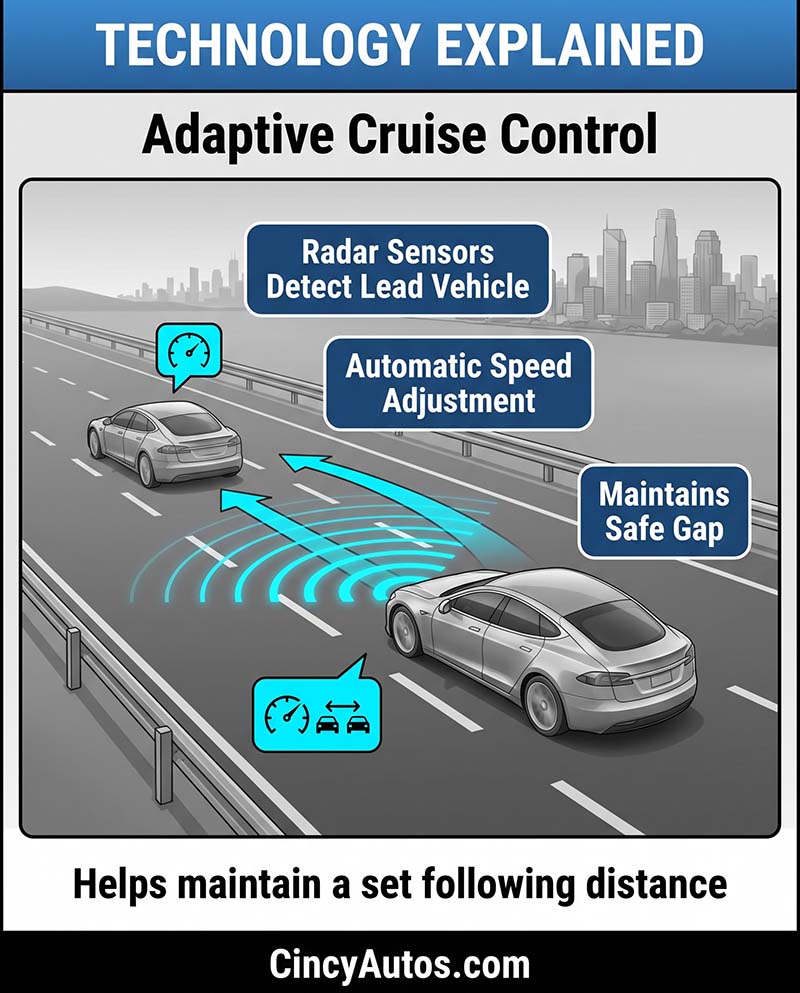
How Does Adaptive Cruise Control Work?
Adaptive cruise control typically uses radar, cameras or a combination of sensors to monitor vehicles traveling ahead.
After the driver sets a desired speed and following distance, the system can automatically reduce speed when it detects slower traffic. When the lane ahead opens up, the system can accelerate back toward the selected cruising speed.
Some systems can also operate at lower speeds and may bring the vehicle to a complete stop in traffic, depending on the vehicle and system design.
Adaptive Cruise Control vs. Regular Cruise Control
Traditional cruise control maintains a driver-selected speed until the driver brakes, turns the system off or changes the setting. It does not normally react to slower traffic ahead.
Adaptive cruise control adds the ability to monitor traffic in front of the vehicle and adjust speed automatically to help maintain a selected following distance.
That can make adaptive cruise control especially useful on highways and during longer drives where traffic speed changes frequently.
What Is Stop-and-Go Adaptive Cruise Control?
Some adaptive cruise control systems are designed to work at very low speeds and in stop-and-go traffic. These systems may slow the vehicle to a complete stop when traffic stops and resume driving when traffic begins moving again.
The exact operation varies by manufacturer and vehicle. Some systems can resume automatically after a short stop, while others may require the driver to press the accelerator or a steering-wheel control.
What Do Different Car Brands Call Adaptive Cruise Control?
Manufacturers often use different names for adaptive cruise control technology. You may see terms such as Adaptive Cruise Control, Dynamic Radar Cruise Control, Smart Cruise Control or Intelligent Cruise Control depending on the brand and vehicle.
Even when two vehicles use similar names, their capabilities can differ by model, trim level and model year. That's why it's important to understand what the system actually does rather than relying only on its name.
Is Adaptive Cruise Control Worth Having?
For many drivers, adaptive cruise control can make highway driving more convenient by reducing the need to constantly adjust speed as traffic conditions change.
It may be especially useful for drivers who regularly travel on interstates, take long road trips or spend significant time in changing traffic conditions.
Like other driver-assistance technologies, adaptive cruise control is designed to assist the driver, not replace attentive driving.
What Should You Look for When Buying a Used Car With Adaptive Cruise Control?
If adaptive cruise control is important to you, don't assume every vehicle in a certain model line includes it. Availability can vary by trim level, option package and model year.
Review the vehicle's equipment listing carefully and ask the dealership to confirm that adaptive cruise control is included on the specific vehicle you're considering.
It's also worth understanding the capabilities of that particular system. Adaptive cruise control technology has evolved over time, so an older used vehicle may operate differently from a newer model.
Frequently Asked Questions About Adaptive Cruise Control
Does adaptive cruise control steer the vehicle?
Not necessarily. Adaptive cruise control mainly manages vehicle speed and following distance. Steering assistance is typically handled by a separate feature such as lane centering or lane-keeping assist.
Can adaptive cruise control stop the car completely?
Some systems can bring the vehicle to a complete stop, while others are designed primarily for higher-speed driving. Capabilities vary by vehicle and system.
Does adaptive cruise control work in bad weather?
Performance may be reduced when cameras or radar sensors are affected by heavy rain, snow, ice, fog or dirt. Drivers should always remain attentive and follow the vehicle manufacturer's recommendations.
Is adaptive cruise control the same as self-driving?
No. Adaptive cruise control is a driver-assistance feature. The driver remains responsible for controlling the vehicle and paying attention to traffic and road conditions.
Can used vehicles have adaptive cruise control?
Yes. Adaptive cruise control has been available on many vehicles for years and can be found on a wide range of used cars, trucks and SUVs.
Explore More Vehicle Technology
Adaptive cruise control is just one of many driver-assistance technologies available on today's vehicles. Explore more CincyAutos Technology Explained guides to learn how other popular safety and convenience features work.
Technology Explained | Blind Spot Monitoring | Automatic Emergency Braking | Lane Centering
Find the Right Vehicle and Technology for You
Explore vehicles available through CincyAutos and our Cincinnati-area dealerships. Compare new, Certified Pre-Owned and pre-owned vehicles to find the features and technology that matter most to you.