











Technology Explained
Car Technology & Safety Features Explained
Today's vehicles offer more technology than ever before, but what do all those features actually do? CincyAutos Technology Explained makes it simple to understand the driver-assistance, safety and convenience features you'll find in many new and used vehicles.
Explore the features below to learn how they work, what they can help with and what to look for when shopping for your next vehicle.
What Is Adaptive Cruise Control?
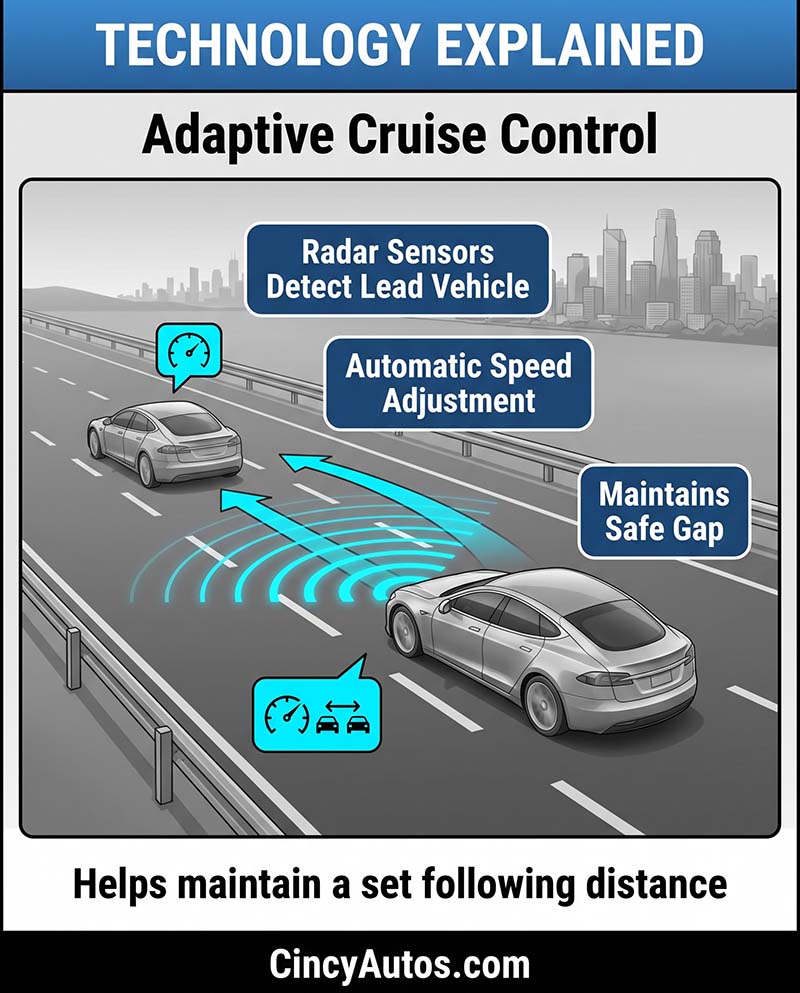
Adaptive cruise control is a driver-assistance feature that can automatically adjust your vehicle's speed to help maintain a selected following distance from the vehicle ahead.
Unlike traditional cruise control, which simply maintains a set speed, adaptive cruise control typically uses radar, cameras or other sensors to monitor traffic ahead. If a slower vehicle is detected, the system can reduce your speed and then accelerate again when traffic clears.
Depending on the vehicle, some systems can also operate in slower stop-and-go traffic.
What Is Blind Spot Monitoring?
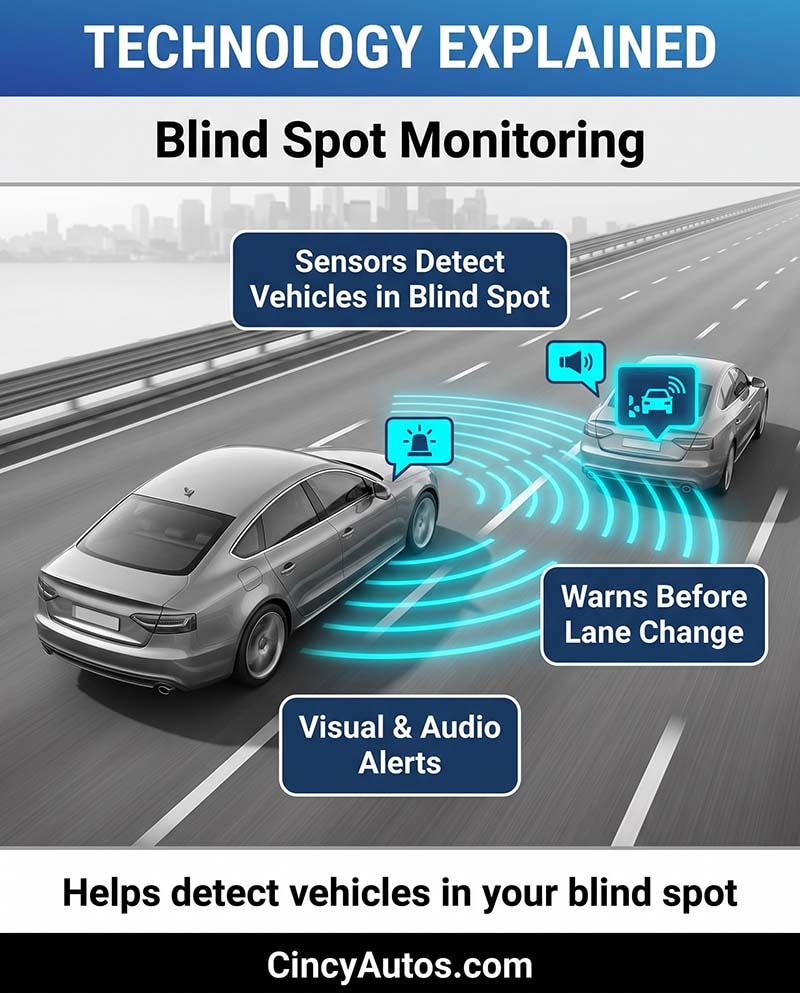
Blind spot monitoring is a driver-assistance feature designed to help alert you when another vehicle is traveling in an area that may be difficult to see in your side mirrors.
The system typically uses sensors positioned around the vehicle to monitor nearby traffic. When another vehicle enters a monitored blind-spot area, a warning light may appear in or near the corresponding side mirror.
Some systems can provide an additional audible or visual warning if you activate your turn signal while a vehicle is detected in the blind spot.
What Is Automatic Emergency Braking?
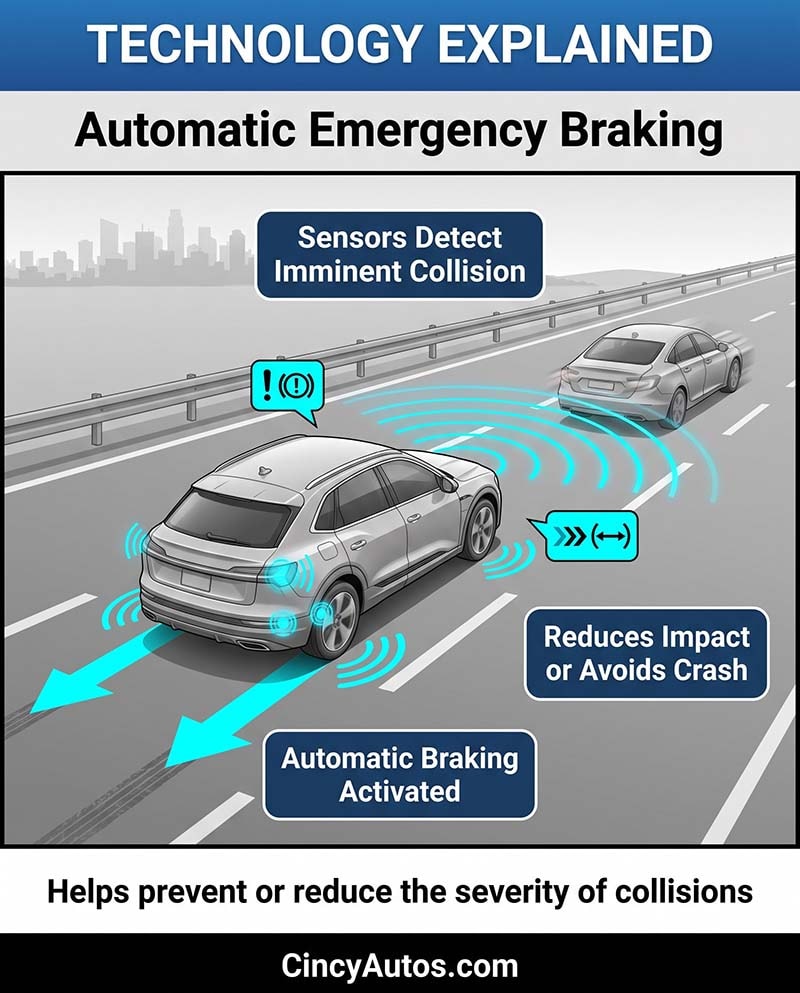
Automatic emergency braking, often called AEB, is a safety feature designed to help reduce the risk or severity of certain collisions by automatically applying the brakes when the system detects an imminent crash.
Cameras, radar or other sensors can monitor the road ahead. If the system determines that a collision may occur, it may first warn the driver. If the driver does not respond quickly enough, the vehicle may automatically apply braking.
The capabilities of automatic emergency braking systems vary by vehicle, model year and driving conditions, so the technology should never replace attentive driving.
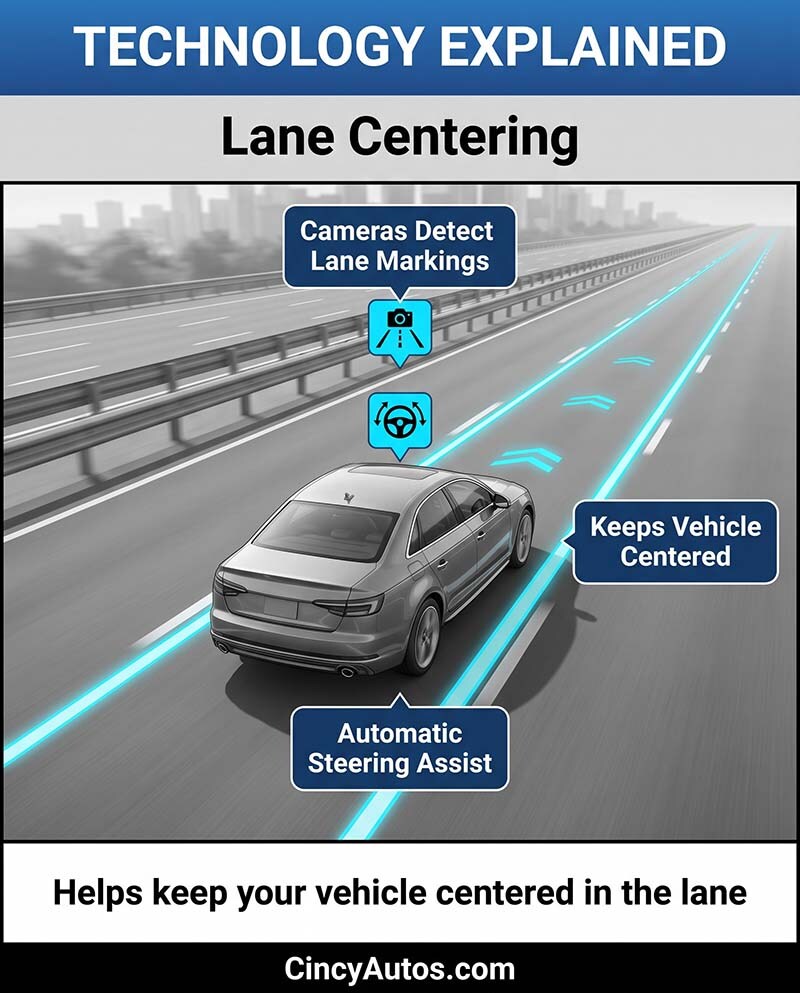
What Is Lane Centering?
Lane centering is a driver-assistance feature designed to help keep a vehicle positioned near the center of its detected travel lane.
The system typically uses a forward-facing camera to identify lane markings and can make small steering adjustments to help maintain the vehicle's position within the lane.
Lane centering is different from a basic lane departure warning system. Lane departure warning generally alerts you when the vehicle begins leaving its lane, while lane centering can actively provide steering assistance to help maintain lane position.
Car Technology Isn't Just for New Cars
Many driver-assistance and safety technologies that were once limited to luxury or high-end vehicles can now be found on a wide variety of used cars, trucks and SUVs.
When comparing used vehicles, understanding features such as adaptive cruise control, blind spot monitoring, automatic emergency braking and lane centering can help you determine which vehicle has the technology that's most useful to you.
Keep in mind that feature names, capabilities and availability can vary by manufacturer, model, trim level and model year.
The Same Technology May Have Different Names
One reason vehicle technology can be confusing is that manufacturers don't always use the same name for similar features. A system that performs a similar function may have a different name depending on the vehicle brand.
That's why it's helpful to understand what the technology actually does rather than relying only on the feature name. CincyAutos Technology Explained is designed to help make those features easier to understand as you compare vehicles from different manufacturers.
Frequently Asked Questions About Car Safety Technology
What are driver-assistance features?
Driver-assistance features are technologies designed to help drivers with certain aspects of driving, such as monitoring nearby traffic, maintaining speed or following distance, staying within a lane or responding to a potential collision.
Are driver-assistance systems the same as self-driving?
No. Most driver-assistance technologies found in today's vehicles are designed to assist the driver rather than replace the driver. Drivers remain responsible for controlling the vehicle and paying attention to the road.
Can used cars have advanced safety technology?
Yes. Features such as blind spot monitoring, adaptive cruise control and automatic emergency braking have been available on many vehicles for years and can be found on a growing number of used cars, trucks and SUVs.Do all manufacturers use the same names for these features?
No. Manufacturers often use their own names for driver-assistance technologies, and the capabilities of similarly named systems can vary by brand, model, trim level and model year.
How can I tell if a used vehicle has a specific technology feature?
Review the vehicle's listed equipment and specifications and ask the dealership to confirm important features. Equipment can vary even between vehicles of the same model and model year.